‘The thing a writer has to avoid is being the “voice” of his people and pretending he can speak for them’.
English Department
Learning English is important and many people from around the world study it as a second language. It is the language of science, aviation, computers, diplomacy and tourism. Being well-grounded and articulate in the language increases your chances of getting a good job in a multinational company within or outside your home country.
English is a core subject at Grange School. We aim to deliver a broad, exciting and challenging curriculum where students develop their reading, writing, listening and speaking skills. We strongly believe that English Language should stand at the centre of our students’ intellectual and imaginative development.
Key Stage 3
At Key Stage 3, we aim to inculcate enthusiasm and creativity in our students while preparing them to develop strong reading, writing and analytical skills.
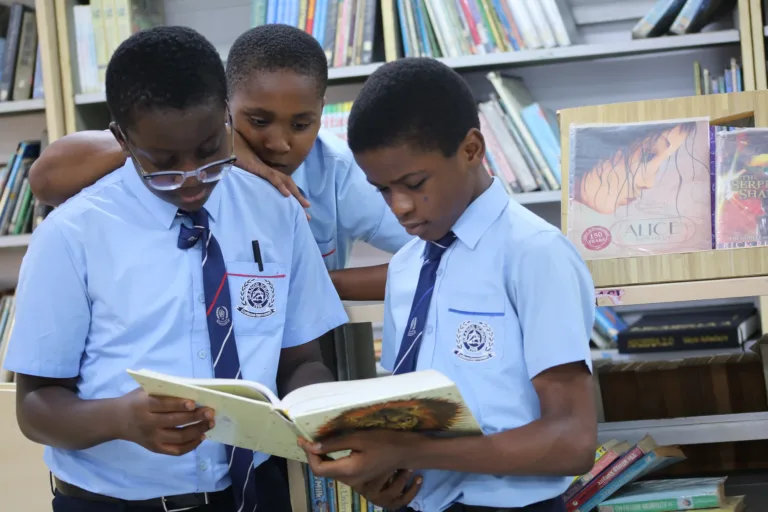
Our students enjoy analysing poetry, prose and drama. They learn to read between the lines, exhibiting deep understanding of writers’ use of language through deductive reasoning.
Year 9 is particularly critical as it is the terminal class for Key Stage 3. Apart from sitting for the Checkpoint Examination, it also serves as a transition class into IGCSE.
A Journey to Self-Discovery.
“We returned to our places, these Kingdoms, but no longer at ease here, in the old dispensation, With an alien people clutching their gods. I should be glad of another death.” ―T. S. Eliot
Literature means a single body of written frameworks. It originated from Latin root literatura (litteratura) which means letter or handwriting. It’s categorised into many forms like fiction/non-fiction, poetry/prose, novel, short-story, drama. It is considered to be an art which possess intellectual value. Based on interests, it may be philosophical, historical, journalistic, and scientific.
At Grange School, Literature is an important component of a total language arts programme at all grade levels because of the many benefits it offers. Here are some reasons for integrating literature into our curriculum.
Studying literature involves reading, discussing, thinking, writing and helping students to improve in these areas. It also encourages students to think critically and specifically.
Literature is important at Grange because it provides a language model for our students. Good literature exposes children to correct sentence patterns, standard story structures, and varied word usage. Children for whom English is a second language can improve their use of the language with interesting context, and all children benefit from a range of new vocabulary that is woven into the stories.
In Key stage three, Literature is integrated with English Language to aid students’ understanding of literary principles which involves the use of imagery, symbolism and how writers use language. The knowledge of language devices is a critical tool in any form of writing.
Many Grange students choose literature in IGCSE Examination having realized the humongous impact literature makes in their studies and everyday life.
🔒 Privacy Notice
×
This website uses cookies to improve your experience. By using this website, you agree to our Privacy Policy .