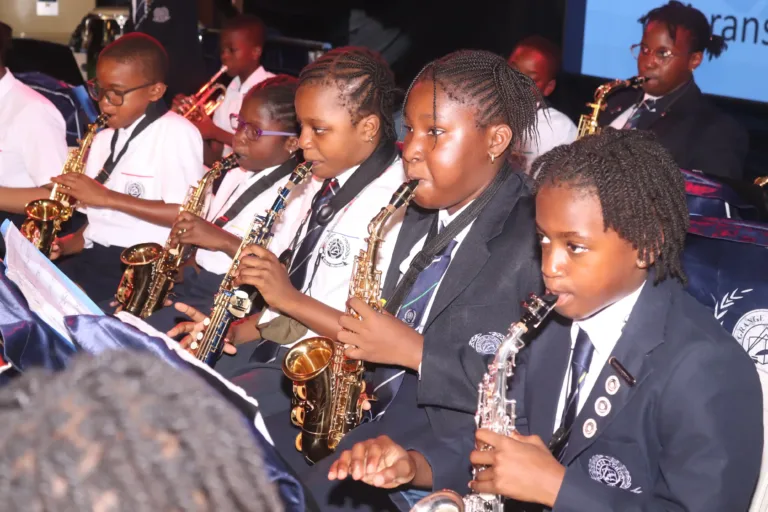
At Grange Primary School, music is delivered by a range of specialist teachers who work closely with staff to create a highly enriched curriculum. The aim is to inspire and challenge all pupils by equipping them with the knowledge and skills to develop a love of music. As pupils progress, they should develop an engagement with music, exploring and listening to a range of famous composers and performers, and developing their composing and improvisation skills. Pupils are also given opportunities to develop their singing and performing skills in a range of supportive and encouraging environments. Visiting teachers also work with the music teachers to collaborate their efforts. Details of the Programme of Study for Music can be found here: PRIMARY_national_curriculum_Music
Visiting Music Teachers at Grange School (VMTs)
Music plays a central role in the life of Grange Primary School. The subject teachers are supported by a team of visiting music teachers offering tuition across a wide range of instruments. Currently, nearly one in every four pupils at Grange Primary School has individual instrumental or singing lessons in the school. We teach the Recorder, Piano, Clarinet, Saxophone, Trumpet, Violin, and Singing. All lessons last 50 minutes and take place in one of our practice rooms. Pupils are expected to arrive at their lessons during the normal school day, leaving their class lesson to attend.
Activities
The department offers numerous performance opportunities for developing musicians and encourages participation in the orchestra, concerts, choirs, and vocal groups. Pupils are also active in forming their own groups, which are then supported by staff where appropriate.
ABRSM
Our pupils take examinations with the ABRSM (Associated Board of the Royal Schools of Music), providing formal assessment and recognition of their progress and achievement.
The national curriculum for music aims to ensure that all pupils:
perform, listen to, review and evaluate music across a range of historical periods, genres.
styles and traditions, including the works of the great composers and musicians.
learn to sing and to use their voices, to create and compose music on their own and with others, have the opportunity to learn a musical instrument, use technology appropriately and have the opportunity to progress to the next level of musical excellence.
understand and explore how music is created, produced and communicated, including through the inter-related dimensions: pitch, duration, dynamics, tempo, timbre, texture, structure and appropriate musical notations.
KEYSTAGE 1
Pupils in Key Stage One will be taught to:
use their voices expressively and creatively by singing songs and speaking chants and rhymes
play tuned and untuned instruments musically
listen with concentration and understanding to a range of high-quality live and recorded music
experiment with, create, select and combine sounds using the inter-related dimensions of music
KEYSTAGE 2
Pupils in Key Stage Two will be taught to:
play and perform in solo and ensemble contexts, using their voices and playing musical instruments with increasing accuracy, fluency, control and expression
improvise and compose music for a range of purposes using the inter-related dimensions of music
listen with attention to detail and recall sounds with increasing aural memory
use and understand staff and other musical notations
appreciate and understand a wide range of high-quality live and recorded music drawn from different traditions and from great composers and musicians